
Why check your car's value before you sell or trade it
When an estimate helps: retail, trade-in and private-sale differences
Using a car value calculator can help set realistic expectations before you list, trade or negotiate. Online estimates are starting points that reflect typical outcomes: private-sale prices often exceed trade-in offers, and dealer retail asking prices are usually higher than both, though exact gaps depend on model and region and should be checked against recent local listings Consumer Reports.
Knowing likely outcomes ahead of time reduces uncertainty when you decide whether to prepare the vehicle for sale, accept a dealer offer, or try a private sale. Treat calculator outputs as guideposts; they are useful for planning but not formal appraisals Edmunds TMV.
Most consumer-facing tools aim to estimate one of three values: retail asking price, trade-in value, or an expected private-sale price. The choice you need depends on your goal: sell quickly to a dealer, list privately, or understand fair dealer offers. These tools are not a replacement for comparing recent local listings and dealer behavior Edmunds TMV.
Short-term market shifts can move trade-in and dealer retail values enough that a single snapshot may mislead. Wholesale indices capture that volatility and can be a useful signal when you reconcile calculator outputs with current local prices Manheim Used Vehicle Value Index.
Retail asking price is what dealers list for a customer to buy and often includes dealer margin and reconditioning costs. Trade-in value is what a dealer might offer to acquire your car as inventory, and private-sale estimate is what a typical individual seller might expect to receive. Each is a different market reference and will usually produce different numbers Edmunds TMV.

Understanding which estimate you need reduces confusion. If you plan to list privately, the private-sale estimate is more relevant than a trade-in figure. If you want a quick sale to a dealer, compare trade-in estimates across tools to see a likely range Consumer Reports.
Run multiple online estimates with consistent inputs, include a VIN-based history report, compare results to recent local listings and auction trends, then set a price range and document the condition and history for buyers.
When you run estimates, state your intended outcome clearly to the tool or to the dealer so you compare like with like.
Modern valuation tools rely on three broad data inputs. First, retail listing and dealer transaction data provide recent asking prices in consumer markets. Second, wholesale auction indices such as Manheim track auction results and short-term trends that influence dealer valuations. Third, historical vehicle records, including VIN-based reports, show events that change buyer willingness to pay. These inputs are weighted differently by providers, which explains variation between tools Manheim Used Vehicle Value Index.
Because providers update models frequently and emphasize different inputs, two respected tools can give different numbers for the same car. Use that variation to bracket a realistic range rather than expecting exact agreement Kelley Blue Book.
What a vehicle valuation tool is and the main types of estimates
Retail asking price vs trade-in value vs private-sale estimate (car value calculator)
Retail asking price is what dealers list for a customer to buy and often includes dealer margin and reconditioning costs. Trade-in value is what a dealer might offer to acquire your car as inventory, and private-sale estimate is what a typical individual seller might expect to receive. Each is a different market reference and will usually produce different numbers Edmunds TMV.
Understanding which estimate you need reduces confusion. If you plan to list privately, the private-sale estimate is more relevant than a trade-in figure. If you want a quick sale to a dealer, compare trade-in estimates across tools to see a likely range Consumer Reports.
Data sources behind estimates: listings, auctions, and historical records
Modern valuation tools rely on three broad data inputs. First, retail listing and dealer transaction data provide recent asking prices in consumer markets. Second, wholesale auction indices such as Manheim track auction results and short-term trends that influence dealer valuations. Third, historical vehicle records, including VIN-based reports, show events that change buyer willingness to pay. These inputs are weighted differently by providers, which explains variation between tools Manheim Used Vehicle Value Index.
Because providers update models frequently and emphasize different inputs, two respected tools can give different numbers for the same car. Use that variation to bracket a realistic range rather than expecting exact agreement Kelley Blue Book.
How valuation estimates are calculated: the core framework
Primary value drivers: mileage, condition, trim and model year
Calculators focus on a few consistent drivers: mileage, visible condition, trim and model year are the primary inputs used by major consumer tools to estimate retail and trade-in values Edmunds TMV.
Enter mileage carefully. Small errors in reported miles can push an estimate up or down because mileage is one of the largest determinants of depreciation. Condition notes and photos help the tool align its assumptions with real condition rather than default grades Kelley Blue Book.
Before you run tools, document condition with clear photos and concise notes. Standard views-front, rear, both sides, interior, odometer, and engine bay-help tools and buyers assess condition more accurately. Consumer guidance suggests assembling maintenance records to support condition claims Consumer Reports.
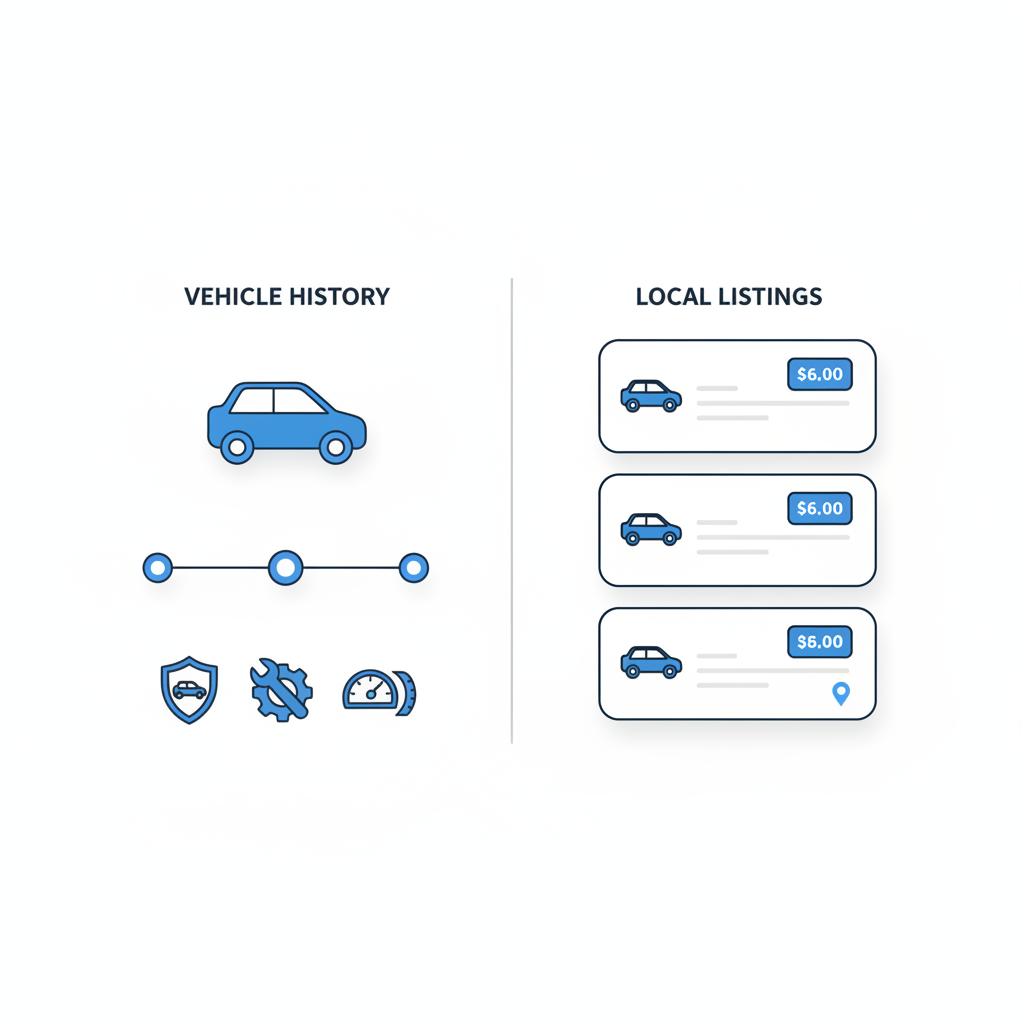
Enter exact mileage, trim, and VIN for the most accurate estimate
Use precise values to reduce estimate variation
Local market adjustments and ZIP-code effects
Tools apply ZIP-code or regional adjustments to reflect local demand and supply. Two identical cars in different ZIP codes can have notably different recommended prices because dealer demand, local incentives and typical buyer preferences vary regionally Edmunds TMV.
Providers also use recent comparable listings to fine-tune an estimate. If the model has been in short supply locally, the retail estimate can move above the national baseline; conversely, a region with excess inventory may see lower suggested prices Manheim Used Vehicle Value Index.
Model updates happen regularly. Tools refresh their models to reflect new transaction data and auction trends, so re-running an estimate a week or two later can produce a different result.
Which inputs matter most when you use an online estimate
How mileage and visible condition change value
Mileage and condition are the single biggest drivers of depreciation in consumer calculators. A higher-mileage car typically receives a lower estimate all else equal, and visible wear or mechanical issues reduce an estimated private-sale or trade-in value Edmunds TMV.
Before you run tools, document condition with clear photos and concise notes. Standard views-front, rear, both sides, interior, odometer, and engine bay-help tools and buyers assess condition more accurately. Consumer guidance suggests assembling maintenance records to support condition claims Consumer Reports.
Effects of trim, options and model year
Trim level, optional packages and powertrain choices often change value more than casual sellers expect. Higher trims or desirable packages can move an estimate upward, while base trims or removed options can lower it. Exact model year and the precise trim name should be entered to avoid mismatches that skew results NADA Guides.
Powertrain matters when fuel economy or electric range is a buyer concern. Enter the correct engine and transmission combination so the tool compares truly comparable listings and does not apply the wrong baseline.
As you prepare inputs, collect a mileage check and service history summary. These details improve estimate accuracy and help explain differences between trade-in and private-sale numbers.
How a VIN-based vehicle history report changes an estimate
What history reports include: accidents, ownership and title brands
A vehicle history report typically lists accident history, ownership history, service records, mileage checks and title status. Including a VIN when running a valuation lets tools account for recorded incidents that influence buyer willingness to pay CARFAX. For VIN-specific scanning and appraisals, some services offer dedicated VIN scanners such as Carbly.
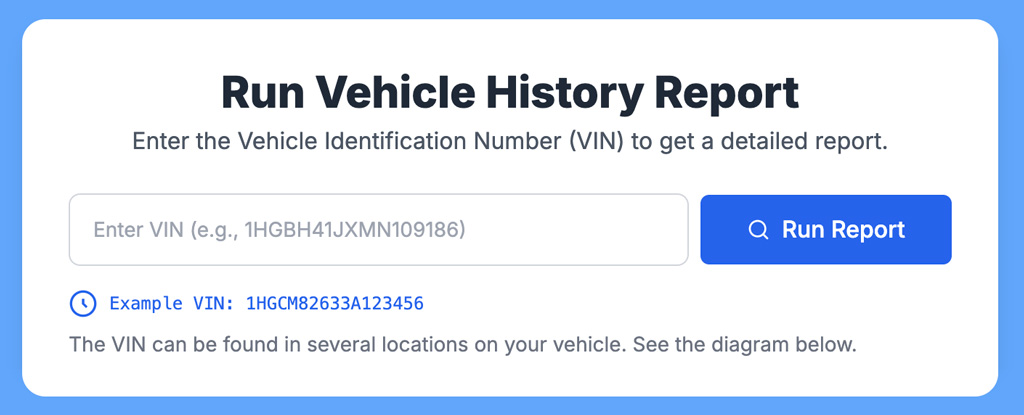
When a history report shows reported collisions, branded titles or gaps in service records, many buyers and dealers reduce their offers. That does not mean every reported event equally changes value, but reported damage or branded title status commonly lowers estimated value compared with an otherwise similar vehicle CARFAX.
Present history findings transparently when you sell. A concise summary and copies of the VIN-based report reduce buyer uncertainty and can explain why your asking price differs from a simple calculator output Consumer Reports.
How reported incidents typically affect buyer willingness to pay
Reported incidents are associated with lower buyer willingness to pay because they shift perceived future risk. That change is reflected both in private buyer behavior and in dealer trade-in offers; tools that accept a VIN tend to lower the estimate if the history contains relevant records CARFAX.
Compare multiple tools and adjust for recent market signals
Reconcile differences between tools
Consult at least two valuation tools and compare their outputs rather than relying on a single number. Different providers weight listings, auctions and historical records differently, so a range helps you identify outliers and form a realistic estimate Edmunds TMV.
Record the inputs you entered to each tool so you can confirm you compared like with like. Small differences in trim labels, mileage or condition grading account for much of the variation between tool outputs Kelley Blue Book.
Use local listings and auction trends to refine an estimate
Compare calculator outputs to recent comparable listings in your ZIP code. Look for completed sales where possible, and if only asking prices are visible, treat them as upper-bound signals. Auction indices such as Manheim can reveal recent short-term volatility that makes trade-in or dealer retail values move faster than national baselines Manheim Used Vehicle Value Index.
Adjust for dealer incentives and likely reconditioning. Dealers may add value through servicing and cosmetic repairs, which affects retail asking prices. When comparing to private-sale estimates, subtract likely reconditioning and dealer margin to align the ranges Consumer Reports.
Common mistakes and how to avoid valuation pitfalls
Relying on a single estimate
One frequent error is trusting a single tool without cross-checking. A second tool or a look at local comparable listings often reveals whether a number is an outlier or part of a consistent range Edmunds TMV.
Another common mistake is entering incorrect mileage, trim or condition information. Those input errors distort results quickly, so double-check the odometer, verify the exact trim level and use recent service records when available NADA Guides.
Ignoring vehicle history or incomplete condition descriptions
Failing to run a VIN report or to document service history can leave value on the table because buyers and dealers discount for unknowns. Obtain a VIN-based report and be ready to explain any flagged items when you set an asking price CARFAX.
Fix simple presentation issues before listing. Clean photos, a short maintenance summary and clear disclosures about known issues build credibility and reduce the likelihood of low offers due to uncertainty Consumer Reports.
Step-by-step example: from calculator outputs to a listing price
Sample case: mid-size sedan with moderate mileage
Start by collecting core inputs: VIN, exact mileage, clear condition photos and a short service history. Enter the same mileage, trim and condition notes into at least two online valuation tools to produce comparable outputs. Record both results and note the differences in number and the inputs you used Edmunds TMV.
Next, search for recent comparable listings in your ZIP code for the same model year, trim and similar mileage. Compare asking prices and, where available, completed sale records. If auctions show a recent spike or drop for the model, factor that in-auction indices can indicate short-term movement that affects trade-in and retail values Manheim Used Vehicle Value Index.
Run a vehicle history report to refine your estimate
Gather your VIN and clear photos, then run consistent estimates so you can compare like with like before you set an asking price.
If a VIN-based report shows a reported collision or a title brand, expect a lower estimate and document the repair history and service receipts. Disclose history findings in the listing and keep a copy of the VIN-based report available to serious buyers to reduce friction and explain price differences CARFAX.
Finally, set a target price range rather than a single number. Use the lower end as a likely trade-in or quick-sale expectation and the higher end for a private-sale asking price, adjusted for local demand and any reconditioning you plan to do. List transparently and be prepared to justify the range with history and market comparables Consumer Reports.
After listing, monitor responses and be ready to revise the asking price if local interest or recent sales suggest a different realistic number. Keep records of messages and offers so you can see how the market is responding and adjust strategy accordingly.
A calculator gives an estimate based on public data and model assumptions; trade-in offers often differ because dealers account for reconditioning, local demand and auction values. Use multiple tools and local comparables to narrow the range.
Yes. A VIN-based vehicle history report can change an estimate if it shows accidents, branded titles or incomplete service records. It helps explain valuation differences to buyers or dealers.
Yes, but reconcile outputs from several tools and compare recent local listings to set a realistic asking range, and prepare photos and service records to support your price.
References
- https://www.consumerreports.org/cars/car-value-estimator/
- https://www.edmunds.com/tmv/
- https://www.coxautoinc.com/market-insights/manheim-used-vehicle-value-index/
- https://www.kbb.com/whats-my-car-worth/
- https://www.consumerreports.org/cars/how-to-determine-your-cars-value/
- https://carfaxdeals.com/how-to-use
- https://carfaxdeals.com/vinreport
- https://www.carfax.com/vehicle-history-reports/vehicle-history-and-car-value
- https://getcarbly.com/
- https://carfaxdeals.com/run-report
- https://www.nadaguides.com/